Seasonal Arts Programme: Litha

Is summer always destined to zoom past this fast? Somehow, we're already approaching midsummer - but how better to mark it than with another creative get-together?
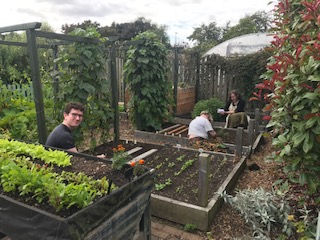
We'll be gathering this coming Sunday to celebrate the change in the season with our usual joyful combination of crafting and sharing a pot luck feast in a lovely garden setting. For Litha, we'll be upcycling glass jars using decoupage fabric to create lovely pieces which can be used as lanterns or vases.
If you'd like to join, you're ever so welcome - simply get in touch for more details.

We'll be meeting this Sunday (28th June) between 11am - 2pm. Please send us an email for the location details and any further information you might need.
As with all our events, there is no pressure to participate in all aspects of the gathering - you can come along to join in with crafting, for food, or even just to spend time in a garden setting.
Thank you to Anna for the beautiful background art work featured on our poster.
Caitlin has kindly gathered some research to give us all a bit of insight into Litha...

Midsummer, or Litha, marks the longest day of the year which generally falls between June 20th - June 23rd. Modern festivities tend to recognise Litha on June 21st into the 22nd as this is the midpoint in the Gregorian calendar (and like most pagan holidays coincidentally aligns with a Christian festival, this one being St John’s Day).
In Celtic folklore it is said the Soltices (Litha and Yule) are when the Holly King and the Oak King of the fae folk meet for a battle over who shall rule. Litha marks the beginning of the Holly King’s reign who gradually turns the wheel of the year, and begins the process of welcoming in the dark part of the year.
But, all is not lost, as the summer is not over. Here, we celebrate the peak of solar energy, and the abundance it shall bring. These coming months are essential for a fruitful harvest, therefore, blessing the land and giving thanks is essential. Similar to Beltane, the ancient focus on the power of the sun, represented through fire, is paramount. You may be familiar with the imagery of a flaming wheel being rolled down a hill, and that is thought to represent the journey of the sun across the sky (also just top tier pagan tomfoolary). Fires were also lit to protect the people, land and animals from the mischief of the faerie folk who were able to cross through during this thinning of the veil. And, practically, bonfires keep you warm so you can keep the festivities going into the weest a ‘oors on this very short night.
Unsurprisingly wild flowers are a common symbol of Litha (it varies depending on where you are) and they lend themselves beautifully to the popular activity of creating flower crowns. It is a simple way to celebrate and enjoy the natural abundance surrounding you. Just make sure to leave some for the fairies. Strawberries are also coming into season and would be a common early harvest, sweet treat and/or offering. And it is encouraged that you use this time to recognise your progress, your achievements, and the seeds you have sown earlier in the year, which are now starting to bear fruit. You may not think you have come very far, but I guarantee if you look back to your previous self at Yule, you will have made remarkable strides in these last 6 months which warrant celebration. So, frolic friends! Get your feet on the grass, hands in the soil, and give thanks to this wonderful world and the communities which make it even more special.
Further Links/Sources